
AI is transforming tax compliance, promising efficiency and insight. However, it must be embedded within robust frameworks of accountability and oversight
The widespread adoption of artificial intelligence (AI) has gathered pace in the last three years. But the picture remains blurred: some organisations are racing ahead with AI pilots, quickly developing use cases and testing effectiveness and efficiency. Others remain cautious, watching from the sidelines.
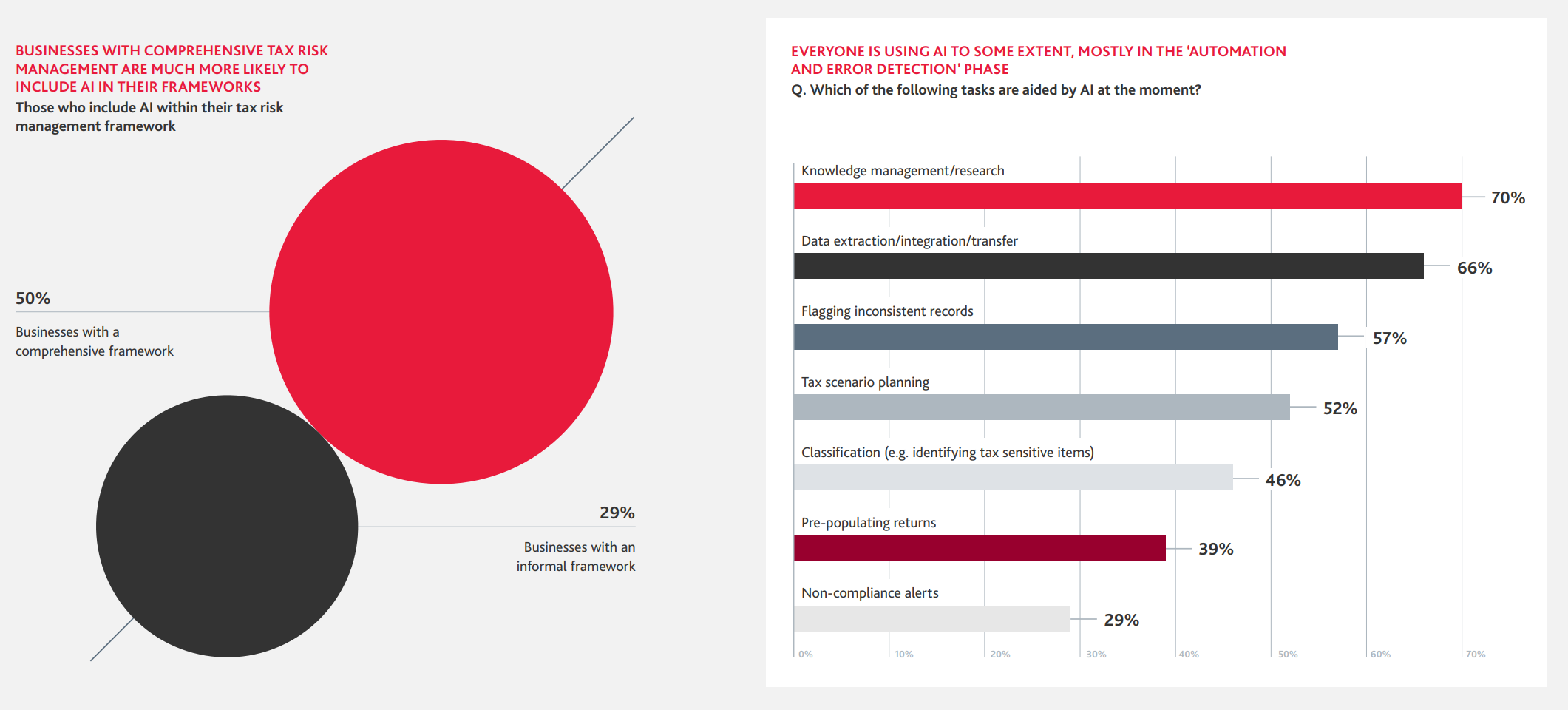
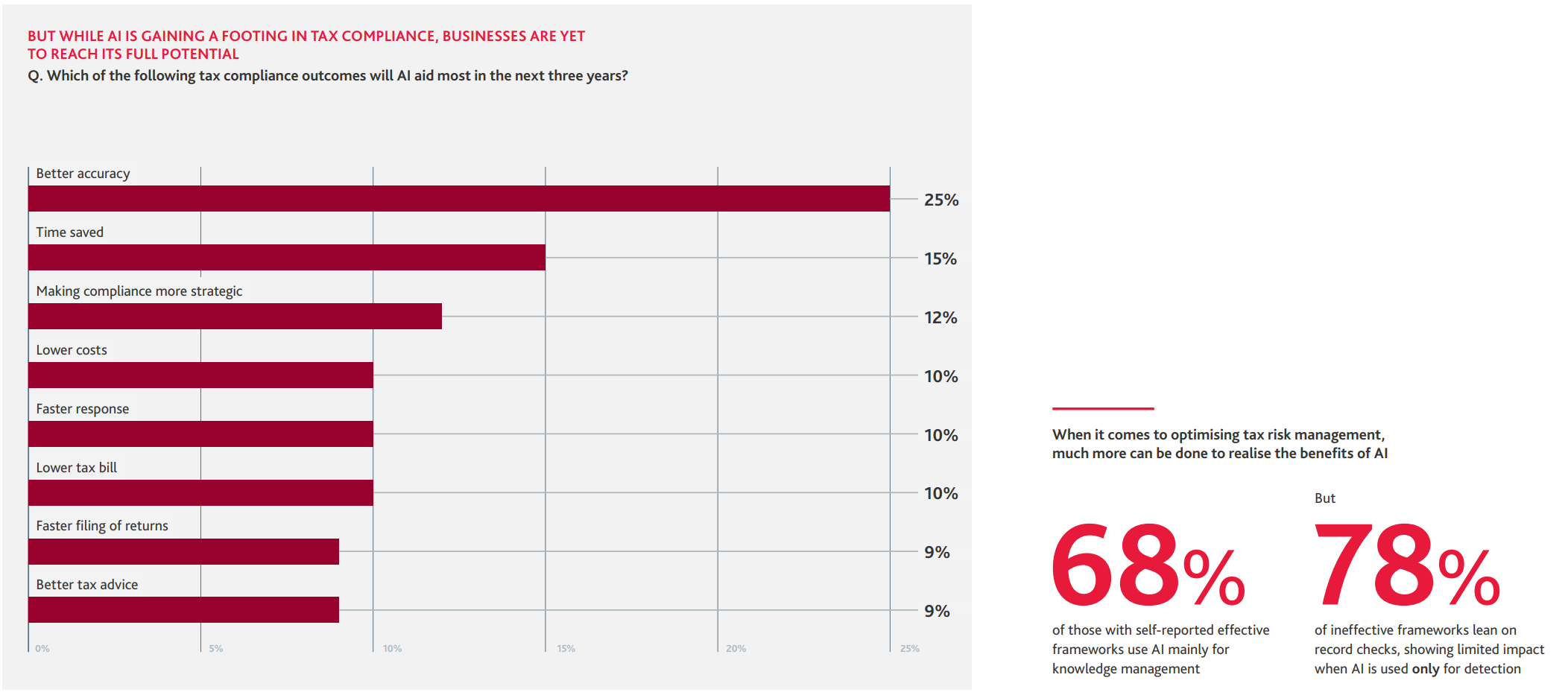
For those who are deploying AI in the tax compliance space, the majority are using it to address repetitive, high-volume tasks, with 70% stating that knowledge management tasks are already benefitting from AI. But the real value – streamlining processes, increasing accuracy, delivering insight – is yet to truly emerge.
There is certainly scope to move AI up the value chain. For example, AkzoNobel is working with a third party to set up AI personas that could help with activities like VAT determination, says Ralf Pieters, the company's Head of Tax.
“It's early days, but it’s clear that to be successful with AI for tax, you need to start small, so make sure you have a few small successes. That's the phase we're currently in, looking at different use cases and asking where we want to prioritise.”
That is certainly the case for regulators. For example, a report from the Institute for Fiscal Studies (IFS)1 looked at how HMRC might consider adopting AI. It suggested that the technology “has the ability to facilitate detection of previously undetectable or hidden correlations, suspicious activity, trends, indicators of tax loss and so on, which could enable early detection and pre-emptive action, or mitigation of these risks in real time.”
For corporates, capturing the benefits of AI adoption relies on several factors, principally a commitment to embed the technology into existing operations and frameworks, subject to the same oversight, rationale and accountability. Using AI as a discrete ‘black box’-style tool increases the risk of muddled accountability and failure to capture insight.
The next frontier is to deploy AI tools in areas where they will deliver and underpin judgment and decision making. That will mark a major change for some, but for those already embedding AI functionality, it represents the next logical step in harnessing the technology’s power of analysis and reporting.
Tax compliance leaders now face the challenge of addressing fears over bias and inaccuracy. They will need to lead the effort to develop robust internal frameworks to ensure that tax compliance strategies and processes are augmented and strengthened by AI - not undermined or compromised by it.