Allan Evans
Global Head of Strategic Projects, BDO Global
It was at Climate Week in New York that something finally clicked for me. I was in the audience listening to a speaker - an astrophysicist, no less - who stood up and calmly dismantled the idea that we should place our bets on hope when it comes to the climate crisis.
“We don’t need hope,” she said. “We have all the solutions. We have the technology. What we lack is the will and the financing to deploy them at scale.”
Those words didn’t feel heavy. They felt liberating. Because if that’s true - and I believe it is - then we’re not waiting for a scientific breakthrough or a miracle. We’re simply waiting on ourselves.
The climate narrative needs a business reboot
On my way home from New York, I kept thinking about what that means for the way we communicate around sustainability.
I’ve always disliked the doom-and-gloom narrative. It breeds paralysis, not action. Fear, guilt, and shame are not good motivators - not for individuals, and certainly not for businesses.
We need to stop telling people they’re failing and start showing them what’s possible.
When we frame the conversation around energy - how to use it more efficiently, how to reduce costs, how to build more resilient operations - we’re not asking for sacrifice. We’re offering an advantage. And that shift, I’ve seen, makes a big difference.
Allan Evans
In Asia, a factory turns sustainability into competitive edge
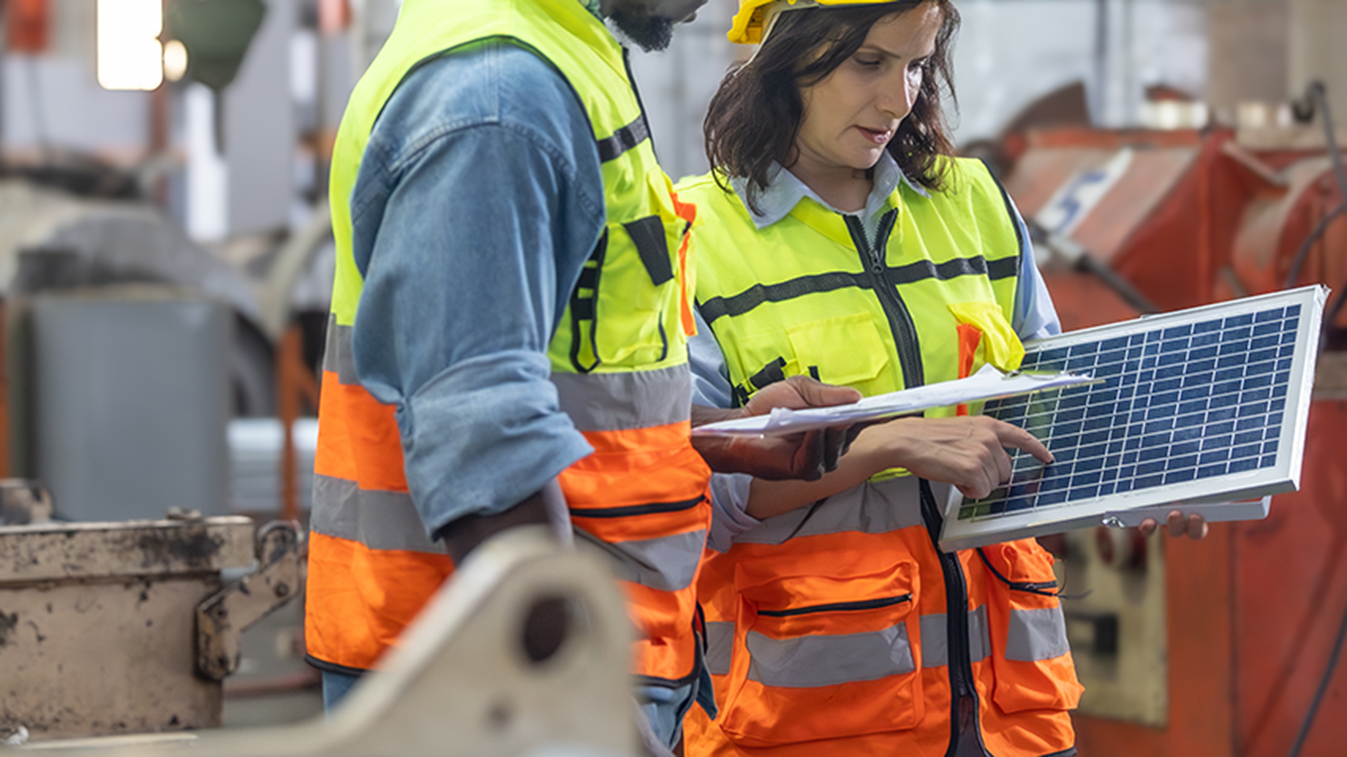
Earlier this year, one of our firms completed an advisory engagement that brought all of this to life. Their client, in Asia, manufactures food and beverages and was facing rising energy costs. In the end, they upgraded systems that most manufacturers don’t consider much: air compressors, boilers, and lighting, for instance. They also upgraded their energy management and brought in predictive maintenance and solar power.
What emerged wasn’t just a factory with lower emissions. It was a smarter, safer, more efficient factory.
And it paid off. Not after years of waiting, but immediately. The company now saves hundreds of thousands of dollars a year in energy costs. That kind of performance doesn’t just support ESG goals. It creates business momentum - and it sends a signal across the entire supply chain.
Real transformation starts with how we use energy
What made this project different was not the technology but the mindset. The company built energy intelligence into the factory from the beginning. Sustainability wasn’t bolted on; it was designed in. And that’s what made it both scalable and bankable.
I’ve come to believe this is where the real leverage is: helping companies see that their moves toward net-zero don’t have to be philosophical. They can be technical, practical, and financial. Especially when energy is the entry point, the conversation shifts from responsibility to opportunity.
Start with action that pays off
There’s something else that struck me as we worked through this case. We talk a lot about net-zero targets, but most companies don’t know how to start. That distant horizon creates inertia.
What this project showed us is that if you can help people take the first step, with a clear business case behind it, the rest begins to follow.
That’s what we need now - not hope, not fear, but action rooted in evidence. We need to move away from moralizing and toward helping companies run better, using less energy, spending less money, and creating smarter systems.
What’s good for the planet can also be good for business
I left Climate Week with clarity about the real barrier. It isn’t innovation - it’s mindset. And the right mindset is what I saw in our work with the food manufacturing client in Asia.
Change isn’t easy, but it’s absolutely possible - and often profitable - when sustainability is built into the core of the business.
This is the narrative we need to share. It’s more optimistic, and it’s more effective. What’s good for the planet doesn’t have to be a burden. It can be a lever. When companies see that clearly, they stop waiting - and start building.